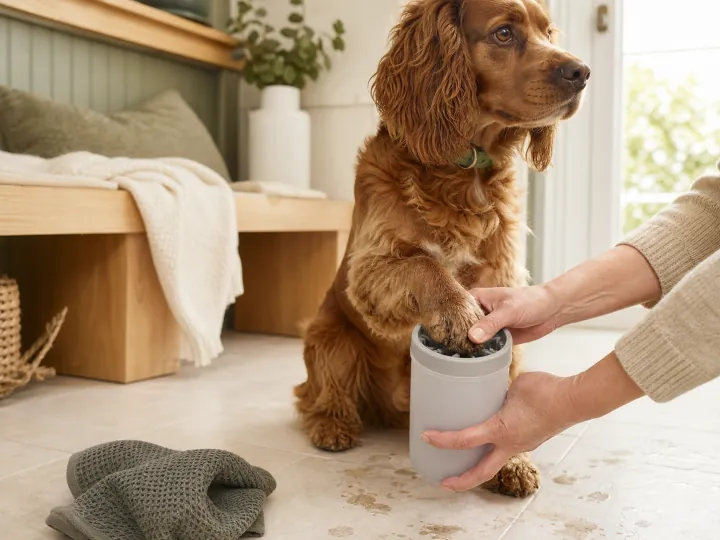
Prepare a calm cleanup station
Set out clean water, an absorbent pet towel and any reusable cleaning tool before a wet walk when possible. Choose a stable, uncluttered spot near the entrance so your dog does not need to cross the room before the paw check.
Keep the water at a comfortable temperature and make sure the floor is not slippery. A consistent setup makes it easier to move through the same short routine after each muddy outing.
Inspect every paw before cleaning
Look between toes and around pads for cuts, irritation, grit, ice, burrs or lodged debris. Check the lower legs too, especially if mud has splashed above the paws.
Do not continue if touching or lifting a paw causes pain. For a possible injury, persistent irritation or anything embedded that is not easy to remove safely, seek qualified professional advice.
Clean muddy dog paws step by step
Work gently and keep the order predictable so the process stays manageable for both you and your dog.
- Let loose surface mud fall away or lift it with the towel without aggressive rubbing.
- Rinse or wipe one paw at a time, without forcing the paw into a container.
- Clean around the pads and between toes only as far as your dog comfortably allows.
- Repeat with fresh water when the first pass becomes muddy.
- Pat each paw and the lower leg dry, including between toes where appropriate.
How to loosen dried mud from dog paws
Dried mud is easier to remove after it has softened. Hold a comfortably damp cloth against the muddy area or rinse gently, allow a brief moment for the dirt to loosen, and then wipe with light pressure.
Avoid picking at hard clumps or pulling dirt through fur, which can tug the skin. If a clump will not release without force, pause and reassess rather than turning the cleanup into a struggle.
Adapt the routine to the mess
For light paw prints after a damp pavement walk, an inspection and careful towel dry may be enough. Thick trail mud may need more than one gentle rinse, while splash on the belly or coat calls for a wider cleanup that stays within your dog’s comfort.
On rainy days, prepare the entryway before leaving and keep a second dry towel nearby. The related guides below cover preventing tracked prints and planning the walk-and-return routine.
Common muddy-paw cleaning mistakes
Rushing, scrubbing or skipping the drying step can make a simple doorway reset harder.
- Do not use water that feels uncomfortably hot or cold.
- Do not force a sore or reluctant paw into a cup or other container.
- Do not pick dried mud from fur when it can be softened first.
- Do not overlook the spaces between toes or leave paws damp after cleaning.
Reset the station for the next walk
Empty and clean reusable tools according to their care directions, launder the towel as directed and let everything dry before storing. Wipe the landing area so grit and moisture do not remain underfoot.
Restock clean water and a dry towel before the next outing. Keeping the station ready supports a calm, repeatable routine without making claims about any one product’s performance.
Common questions
What is the best way to clean muddy dog paws?
Inspect first, loosen surface dirt gently, rinse or wipe one paw at a time, and pat the paws and lower legs dry. Keep the water comfortable and stop if handling causes pain.
How do I get dried mud out of dog paws?
Soften dried mud with comfortable water or a damp cloth before wiping gently. Do not pick or scrub a hard clump if removing it would pull fur or cause discomfort.
Do muddy paws always need a full rinse?
Not necessarily. A light mess may only need an inspection and careful towel dry. Use the least intensive routine that removes dirt comfortably, and rinse when mud remains around the pads or toes.
Related guides
- How to stop muddy paw prints indoors
Set up a landing zone and keep the cleanup path close to the door.
- Rainy-day dog walking tips
Prepare the route, walking gear and return-home station together.
This guide offers general household and pet-care information. Follow product care labels and seek qualified veterinary advice for health, pain or skin concerns.