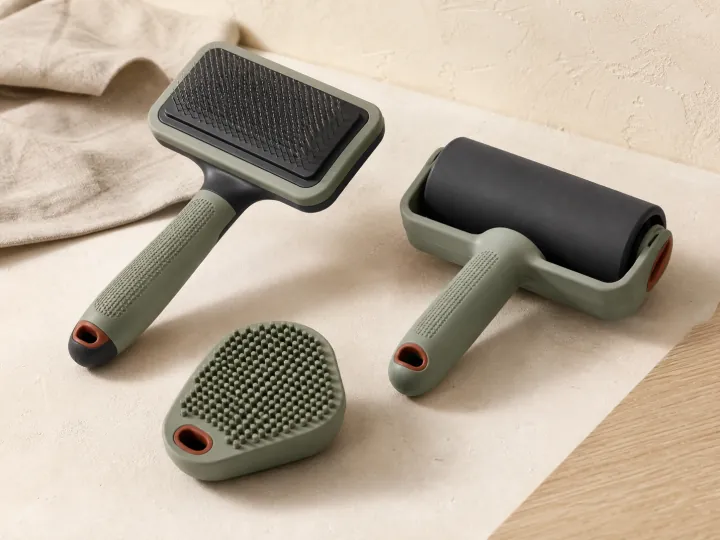
Start with your dog’s normal shedding pattern
Coat type, season, age, health and indoor conditions can all affect how much fur you notice. Watch where hair gathers and how the coat usually changes before increasing grooming frequency.
Sudden bald patches, irritated skin, persistent scratching or an unusual rise in hair loss are not household-cleaning problems. Pause the routine and seek qualified veterinary advice rather than brushing more often.
Build a gentle grooming schedule
Short, calm sessions are easier to repeat than occasional marathon grooming. Choose a tool that is appropriate for your dog’s coat, use light pressure and stop if the skin looks uncomfortable.
- Check the skin and coat for tangles, sore areas or irritation before you begin.
- Brush gently in the direction the coat grows, working through one small area at a time.
- Keep the session short enough that your dog remains comfortable.
- Collect the loosened hair instead of letting it move onto nearby furniture.
- Clean and store the grooming tool according to its care directions.
Clean the places where loose fur lands
After grooming, reset the bed, couch, floor or other places where your dog spends the most time. Start high and work down, then move from open surfaces to seams and edges so loosened hair does not fall back onto a finished area.
Vacuuming, laundering washable throws as directed and doing quick surface resets between deeper cleans can make the workload more predictable. For upholstery-specific steps, use the related couch guide below.
Adjust the routine to the situation
A dog that sheds seasonally may need more frequent, shorter sessions during a coat change and less attention at other times. Multi-dog homes may benefit from separate grooming sessions followed by one coordinated room reset.
For fur in a car, on stairs or along furniture seams, use a method suited to that surface rather than increasing pressure. Always check the care guidance for upholstery, carpet, leather or coated trim before using a cleaning tool.
Common shedding-control mistakes
Trying to remove every hair in one session can lead to overbrushing and an exhausting cleanup cycle. A steadier goal is to collect loose fur regularly and keep priority surfaces easy to reset.
- Do not brush irritated skin or pull through resistant tangles.
- Do not assume one tool is suitable for every coat or household surface.
- Do not wait for heavy buildup before cleaning beds, throws, seams and edges.
- Do not treat sudden or patchy hair loss as normal shedding.
Common questions
Can you completely stop a dog from shedding?
No. Shedding is normal for many dogs. A consistent grooming and cleanup routine can manage loose fur, but it should not promise a fur-free dog or home.
How often should I brush my dog for shedding?
There is no single schedule for every dog. Start with the coat-care guidance that applies to your dog, keep sessions gentle, and adjust based on normal coat changes and comfort.
When is shedding a reason to call a veterinarian?
Seek qualified veterinary advice for sudden or patchy hair loss, sore or inflamed skin, persistent itching, pain, or any change that seems unusual for your dog.
Related guides
- How to remove pet hair from a couch
Clean broad upholstery surfaces before working into seams and edges.
- How to remove dog hair from a car
Use a top-to-bottom routine across seats, carpet and footwells.
This guide offers general household and pet-care information. Follow product care labels and seek qualified veterinary advice for health, pain or skin concerns.